Englander Institute members are committed to mentorship at all levels, through formal and informal programs– This attention is especially important in nurturing the next generation of leaders and allowing us to advance more efficiently across our mission.
Medical Education
Area of Concentration
The Weill Cornell Medical College Area of Concentration (AOC) program allows WCM medical students to dedicate a semester to scientific research in Precision Medicine and Computational Biology. As complementary topics, the Precision Medicine and Computational Biology AOC will increasingly shape the future of healthcare and help prepare WCM students to be future leaders in developing and deploying computational methods to achieve improved patient care.
Precision Medicine and Computational Biology AOC
Students can pursue projects centered on clinical trial matching, machine learning, genomic analysis, enhanced diagnostics, data visualization, and treatment optimization.
Students who choose the Precision Medicine and Computational Biology AOC may either be specifically interested in helping develop new Precision Medicine approaches, perhaps based on epigenomics, single-cell omics, or cell-free DNA; develop predictive models using machine learning and artificial intelligence; leverage data from sensors to predict and model health outcomes; develop applications and pipelines that will directly aid patient care or illuminate disease processes, or may have an area of investigation that falls into the AOC, or may specifically wish to work with a faculty member who is a member of this AOC faculty.
As Precision Medicine and Computational Biology are diverse in their manifestations, the program will offer students exposure to the breadth of insights generated by computational methods and develop expertise in a niche of their choosing. Students will engage in practical and academic exercises that will further refine an individual area of focus within the AOC, which will be expanded upon in a scholarly project under direct mentorship. Students will be encouraged to think broadly and from an interprofessional practice perspective. Goals and learning objectives include:
- Explore the potential of genomic testing, precision medicine, and other modalities for patient care.
- Come up with new and improved approaches for precision medicine.
- Understand the wide range of applications for computational techniques in medicine.
- Understand basic techniques to design and/or implement a subset of these techniques. Understand the benefits and challenges of computational methods as applied to medicine.
- Identify an area suitable for application of a computational technique, under the mentorship of a faculty member from the Institute for Computational Biomedicine or Institute for Precision Medicine at WCM or Tri-Institutional Program in Computational Biology & Medicine or any other suitable faculty member.
- Acquire data for and implement computational techniques toward further understanding of medical sciences, improved clinical decision-making, decreased cost, increased area under the receiver operating curve (AUC) for diagnostics, or decreased latency to results.
Graduate Education
Students from WCM’s 7 multidisciplinary PhD programs, Tri-Institutional PhD and Accelerated PhD/MBA programs, and 6 MS programs are welcome to delve into the specific topics of research offered in various rotations.
PhD Programs
- To explore the potential of genomic testing, precision medicine and other modalities for patient care;
- to come up with new and improved approaches for precision medicine; to understand the wide range of applications for computational techniques in medicine;
- to understand basic plans to design and/or implement a subset of these techniques;
- to understand the benefits and challenges of computational methods as applied to medicine;
- to identify an area suitable for application of a computational approach, under the mentorship of a faculty member from the Institute for Computational Biomedicine or Institute for Precision Medicine at WCM or Tri-Institutional Program in Computational Biology & Medicine, or any other suitable faculty member;
- to acquire data for and implement computational technique toward further understanding of medical sciences, improved clinical decision-making, decreased cost, increased area under the receiver operating curve (AUC) for diagnostics, or decreased latency to results.
Master's Programs
Info about how we work with masters programs
Internship Opportunities
The Englander Institute for Precision Medicine’s internship programs are intended for students in the medical, life science, computational and engineering fields with an interest in precision medicine. Since the Institute’s inception, we have mentored trainees ranging from high school, undergrad, and medical school, to rotating residents and fellows in various areas of the clinic, laboratory, and bioinformatics. We aim to introduce young scientists and engineers to the fast-paced advancements in precision medicine and foster the future of genomic medicine.
Joint EIPM & MCC Summer Internship Program
Summer Internship Program
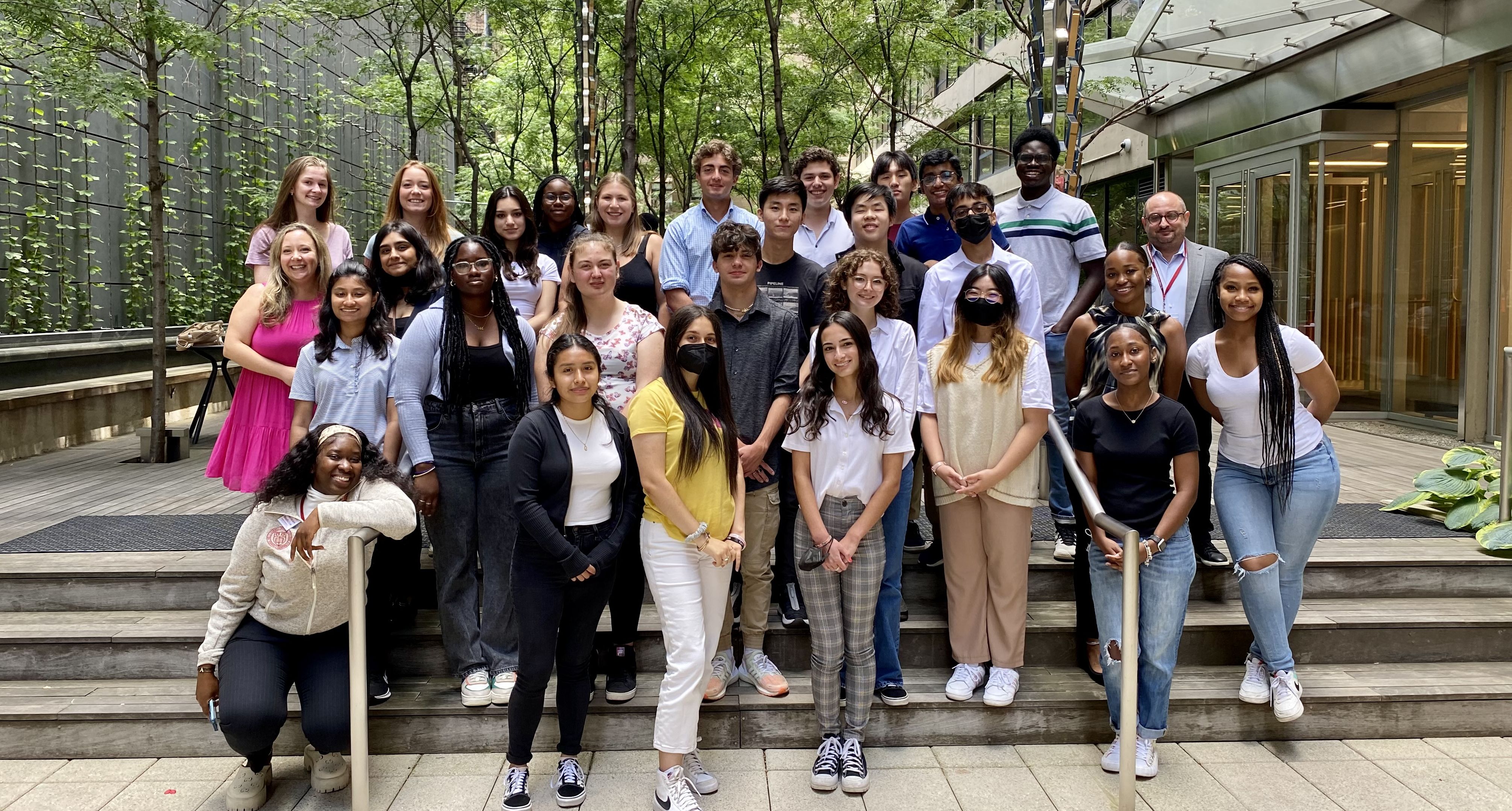
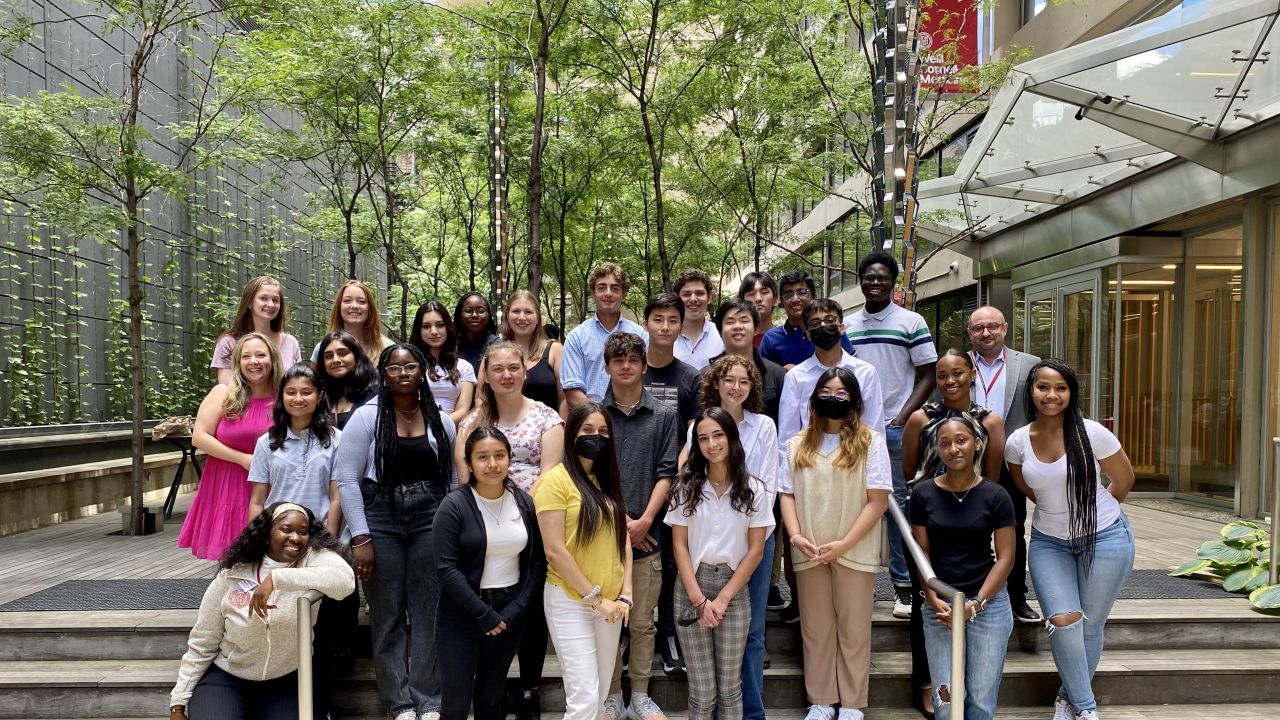
Weill Cornell Medicine's Englander Institute for Precision Medicine and Meyer Cancer Center are committed to WCM’s mission to teach. This 7-week program will provide high school and college students with hands-on mentored research experiences related to cancer and precision medicine with the goal to encourage the pursuit of STEM careers. We anticipate that this program will be held in-person 2-4 days per week, (dependent on mentor availability) on the Upper East Side campus (70th & York Avenue).
During the summer program, students will actively participate in a range of seminars and program-specific didactics related to cancer biology, precision medicine, cancer epidemiology, health disparities, academic research, computational biomedicine, journal clubs, professional development courses and regular lectures, and will have the opportunity to interact with WCM faculty, staff and peers.
Throughout their time at WCM, students will...
- Learn about the translational research hub using precision medicine tools, such as genetics, genomic sequencing, and clinical data to improve patients’ healthcare
- Receive hands-on research mentorship with WCM faculty and fellows
- Interact with Meyer Cancer Center and Englander Institute for Precision Medicine members, including faculty, postdoctoral fellows, graduate students and staff
- Attend professional development workshops focused on resume and personal statement building, networking, and college and graduate school applications
- Draft a 2-page paper about their mentor's research following NIH grant guidelines
Eligibility & Application Consideration
- Some STEM experience is required
- This includes, but is NOT limited to, STEM programs, AP courses, collegiate courses, publications, science fairs, professional conferences, presentatons, completitions, clubs and research experience
- This is an unpaid internship and housing is not available
- Students must be 16 years old as of March 1, 2026
- Must be enrolled in high school or college/university as of September 2025
- Post baccalaureates and higher are not eligible for this program
- Must be in good academic standing that can be verified by either transcript or letter of recommendation from current teacher/professor
- Letters of recommendation must have either a wet signature or a certified electronic signature
- This program does not include physician shadowing or working in clinical, patient-facing settings
- Proof of COVID-19, MMR, and Varicella vaccinations, and TB Blood or Skin Tests required
- Expected time commitment will be ~25 hours/week (4-6 hours in hybrid lectures/events, 20 hours in lab research, mentor meetings, etc.)
- 90% attendance of the program and program lectures/events required to be eligible for Certificate of Completion
- Includes 3 required, on-site, group sessions: Orientation, Career Panel/mid-program check-in, and End-of Program presentations
- All students are required to submit a write-up of their work and present either their summer's work or an elevator pitch at End-of-Program event
- There are no costs associated with this program
CUNY Big Data
A joint training program between City Tech and Weill Cornell Medicine (WCM) of Cornell University was recently awarded a $1.2 million, four-year National Institutes of Health (NIH) Big Data to Knowledge (BD2K) training grant to educate and train undergraduate students in biomedical big data sciences and informatics. The City Tech-WCM Big Data Training Program in Biomedical Informatics (BD2BMI) is led by Evgenia Giannopoulou, PhD, Assistant Professor of Biological Sciences, City Tech, and Jyotishman Pathak, PhD, Frances & John L. Loeb Professor of Medical Informatics, Weill Cornell Medicine.
CUNY Macaulay Honors College
Through semester-long internships, we also introduce several CUNY Macaulay Honors College New Media Lab Fellows to VR, AR, and MR applications.