Nov
19
1:00pm - 2:00pm
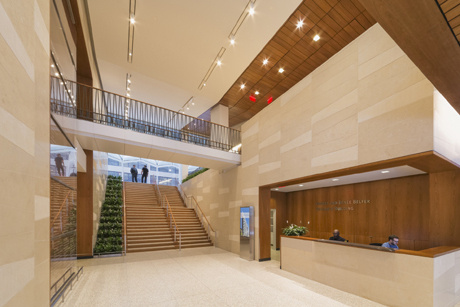
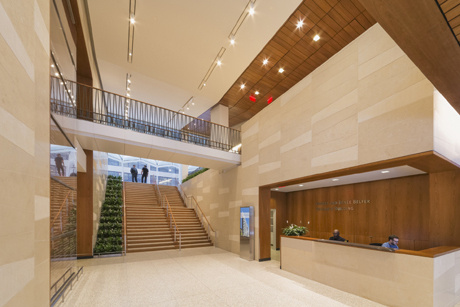
Belfer Research Building
Precision Medicine Research Conference
Thursday, November 19, 2026
1-2PM
Belfer Research Building, Room 1401 and via Zoom
“Presurgical Trials to Understand Prostate Cancer Biology and Therapeutic Responses”
Presented by:
Christopher Barbieri, MD, PhD
Bernard and Josephine Chaus Professor of Urologic Oncology,
Lead for Prostate Cancer, Meyer Cancer Center
Professor of Cell and Developmental Biology,
Weill Cornell Medicine
* This activity has been approved for AMA PRA Category 1 Credit(s)™*
Oct
16
11:00am - 12:00pm
ICB conference room (Y.13.01, Weill Cornell Greenberg Building - 1305 York Ave, New York, NY 10021).
Englander Institute for Precision Medicine | AI Working Group
“Virtual T cell modeling to uncover exhaustion-reversing genetic perturbations in T cells within preinvasive lung adenocarcinoma,”
Presented by: Nishanth Chinnadurai, MS
Graduate Student
Computational Biology
Weill Cornell Medical College

Oct
15
11:00am - 12:00pm
EIPM Precision Medicine Research Conference
Thursday, October 15, 2026
11AM-12PM
via Zoom ONLY
“Germline Susceptibility in Biliary Tract Cancer: The Unresolved Significance of Uncertain Variant”
Presented by:
Andrea Perra, MD, PhD
Full Professor of Pathology,
Specialist in Internal Medicine,
University of Cagliari
National Coordinator, HEAL ITALIA Precision Medicine Laboratories
Coordinator of the UniCa-HEAL ITALIA Biobank, HEAL ITALIA foundation, Italy
* This activity has been approved for AMA PRA Category 1 Credit(s)™*
Oct
13
12:00pm - 1:00pm
Bio-Digital Twins for Precision Oncology: Predicting and Redirecting Resistant Cancer States
Bishoy Faltas, MD
Associate Professor of Medicine
Associate Professor of Cell & Developmental Biology
Chief Research Officer at the Englander Institute for Precision Medicine
Weill Cornell Medicine

Sep
29
10:00am - 11:00am
WCMC Campus; 413 E69 St conf rms; BB 302-D
Englander Institute for Precision Medicine Seminar Series
"The Human Glycome Project – What did we learn from the first 300,000 Human Glycomes”
Presented By:
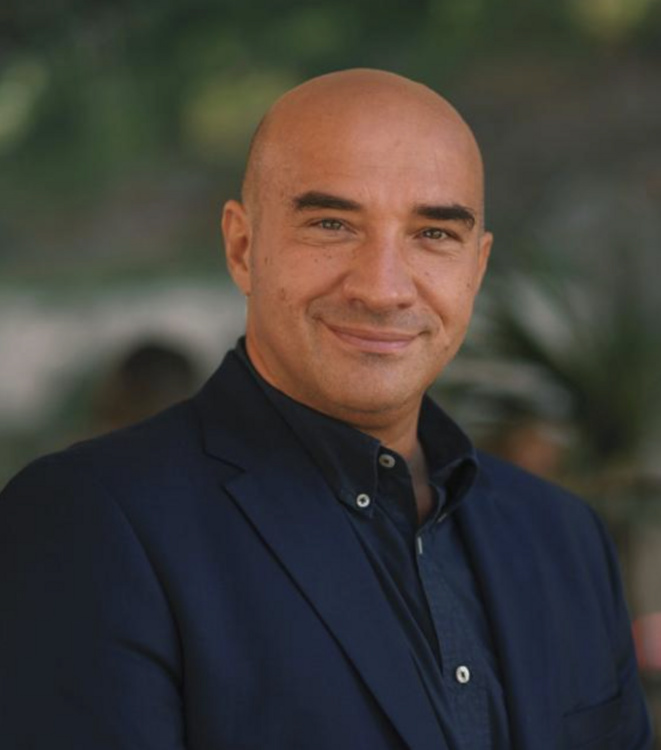
Gordan Lauc, Ph.D.
Professor of Biochemistry and Molecular Biology, University of Zagreb,
Director, National Centre of Scientific Excellence in Personalized Healthcare,
Honorary Professor, King's College London
Dr. Gordon Lauc'c Biography:
Gordan Lauc is a Professor of Biochemistry and Molecular Biology at the University of Zagreb, Director of the National Centre of Scientific Excellence in Personalised Healthcare, Honorary Professor at King's College London, and a member of the Johns Hopkins Society of Scholars. In 2017, he initiated the launch of the Human Glycome Project and serves as one of its two co-directors. His research team is pioneering high-throughput glycomic analysis and the application of glycan biomarkers in the field of precision medicine. By combining glycomic data with extensive genetic, epigenetic, biochemical, and physiological data from over 300,000 individuals, he aims to understand the role of glycans in normal physiology, ageing, and disease. Professor Lauchas co-authored over 300 research articles, which have been cited more than 20,000 times on Google Scholar. In 2007, he founded Genos, a biotech company that is currently the global leader in high-throughput glycomics. Research at Genos led to the development of the GlycanAge biological age test, which is used in over 2,000 clinics worldwide and is widely considered the premier tool for the personalisation of lifestyle interventions.
Sep
24
3:00pm - 4:00pm
Belfer Research Building
Englander Institute for Precision Medicine Journal Club
Thursday, September 24, 2026
3:00 – 4:00 PM EST
Belfer Research Building, Room 1401
https://weillcornell.zoom.us/j/92600608747
Zoom Meeting ID: 926 0060 8747
“AI-Enabled Virtual Spatial Proteomics from Histopathology for Interpretable Biomarker Discovery in Lung Cancer”
Nature Medicine, January 2026
Presented by:
Eda Nur Kozan, MD
Research Pathology Fellow,
Department of Pathology and Laboratory Medicine
Englander Institute for Precision Medicine
Sep
24
1:00pm - 2:00pm
Precision Medicine Research Conference
Thursday, September 24, 2026
1-2PM
via Zoom ONLY
“Intravesical Mesothelin-based CAR TCells Targeting MUC16 EffectivelyControl Bladder Cancer in Preclinical Models”
Presented by:
Parwiz Abrahimi, MD, PhD
Assistant Professor, Department of Urology,
Assistant Professor, Department of Biomedical Sciences,
Samuel Oschin Comprehensive Cancer Institute
Cedars-Sinai Medical Center
*THIS IS A SPECIAL NON-CME LECTURE*
Sep
23
2:00pm - 3:00pm
1305 York Avenue, 13th Fl., Room Y.13.01.
Englander Institute for Precision Medicine – AI Clinic
Join us for our AI Clinic meeting on Wednesday, September 23rd at 2:00pm ET.
(note: more information will be covered outside of weekly topics)
Topic of Discussion for this week
"Making AI Work with Your Own Knowledge- How RAG Helps Researchers and Clinicians Get Better Answers"
Session Leader:
Bhavneet Bhinder, MS
Senior Research Associate in Systems and Computational Biomedicine
Englander Institute for Precision Medicine
AI Clinic Info:
EIPM's bi-weekly sessions (Wednesdays at 2pm-3pm) aim to enhance how we use LLMs for complex tasks, including coding. They will serve as a collaborative space for hands-on troubleshooting, knowledge sharing, and continuous learning.
Who is this for? This clinic is designed for our entire scientific and clinical community, with a special emphasis on trainees (students, postdocs, residents and fellows). It is the perfect forum for:
Researchers and Scientists looking to apply LLMs to data analysis, coding challenges, or manuscript writing.Clinicians interested in exploring how AI tools can securely optimize research and workflows.Trainees seeking a supportive, hands-on environment to learn and get guidance on applying advanced LLMs to their specific projects.What participants can expect from these sessions:
Collaborate with our most LLM-proficient team members (“Super-Users”) to troubleshoot and refine their work.Present real challenges they are encountering (e.g., coding issues, complex prompts, workflow optimization).Potentially share “micro-presentations” when someone discovers a new model, feature, or technique.Our goals are to:
Build internal expertise and share best practices. Help participants overcome real technical challenges, and create a community of practice around practical AI use.
We are currently seeking Super-Users who demonstrate expertise in coding and experience with AI tools such as Chat GPT 5.2, Gemini 3.0, & Claude 4.5 Opus. We are also seeking participants who are looking for troubleshooting guidance.
All skill levels are welcome, from beginners to advanced users.
Reach out to Victoria Cummings (vjc4001@med.cornell.edu) should you have any questions or inquiries.
Sep
15
12:00pm - 1:00pm
413 E69 St conf rms; BB 302-C, BB 302-D
Englander Institute for Precision Medicine Seminar Series
“Precision High-throughput Drug Screening in 3D Glioma Cerebral Organoids”
Presented By:
Stefano Cirigliano, Ph.D.
Director, Glioblastoma Cerebral Organoid Core
Assistant Professor of Research in Neuroscience
“Identifying Selective Therapeutic Combinations for Ovarian Cancer High Throughput Drug Screening and Multi-Omic Integration”
Presented By:
Benjamin D. Hopkins, Ph.D.
Director, Ex Vivo Models, Englander Institute for Precision Medicine
Assistant Professor, Research in Systems and Computational Biomedicine
Weill Cornell Medicine
Abstract for “Precision High-throughput Drug Screening in 3D Glioma Cerebral Organoids”
with Stefano Cirigliano, Ph.D.
Glioblastoma multiforme (GBM), the most common primary malignant brain tumor in adults, remains incurable despite extensive research and clinical efforts. The use of preclinical models that fail to accurately replicate the biological complexity of human disease for drug screening has been suggested as a contributing factor to our inability to identify clinically effective drugs for GBM. Our lab has developed the cerebral organoid glioma (GLICO) model, a co-culture of human cerebral organoids and patient-derived glioma stem cells (GSCs). The GLICO model better recapitulates the human GBM microenvironment and intratumor heterogeneity, making it a promising model for improved drug screening.
The use of the GLICO model as a novel patient-specific drug screening assay will rely on developing tools to precisely assess tumor cell viability in real-time and at multiple time points within a normal cerebral organoid (CO) without disrupting the organoid. Traditional in vitro tumor organoid viability assays, however, fail to distinguish between cell populations and are endpoint-destructive, preventing analysis of tumor response over time.
To address these limitations, we present a novel, non-destructive, and automatable luminescence-based tumor tracking system compatible with both cell-autonomous and co-culture 3D tumor models. Our system detected drug responses in both GSCs and GLICOs with high reproducibility across manual and high-throughput settings. Notably, GSCs exhibited differential responses to the same treatments in GSCs versus GLICOs, underscoring the significance of integrating more physiologically relevant 3D organoid models into drug screening.
Our platform provides a novel, sensitive, and robust tumor tracking platform, enabling real-time, non-destructive measurement of GSC viability within the clinically relevant GLICO model, improving the predictive value of drug screening and precision medicine for GBM.
Abstract for “Identifying Selective Therapeutic Combinations for Ovarian Cancer High Throughput Drug Screening and Multi-Omic Integration”
with Benjamin D. Hopkins, Ph.D.
Ovarian cancer remains a therapeutic challenge due to rapid development of treatment resistance andlimited alternative options when standard-of-care therapies fail. High-throughput drug screening provides a powerful approach to systematically identify novel agents with selective activity against tumor cells. Our work leverages functional drug-response profiling across a genetically diverse panel of patient-derived organoid models to identify tumor-selective agents while simultaneously assessing potential off-target toxicity. Using the Kinome Library, we comprehensively screen for functional kinase dependencies across these diverse models, revealing that ovarian cancers specific dependencies.
To develop rational multi-agent combinations, we integrate ReFLEX multi-omic analysis to map drug-induced adaptive signaling and identify complementary therapeutic regimens. By combining functional screening with multi-omic insights, we construct evidence-based drug combinations targeting interconnected pathways, maximizing efficacy while aiming to minimize toxicity and resistance emergence. This integrated screening approach establishes a scalable platform for discovering selective therapeutics and rationally designing combination regimens.
Sep
10
1:00pm - 2:00pm
Belfer Research Building
Precision Medicine Research Conference
Thursday, September 10, 2026
1-2PM
Belfer Research Building, Room 1401 and via Zoom
“Bio-Digital Avatars for Personalized Sequencing of Bladder Cancer Therapies”
Presented by:
Bishoy Faltas, MD
Chief Research Officer & Director of Bladder Cancer Research,
Englander Institute for Precision Medicine
Gellert Family-John P. Leonard, MD Research Scholar,
Associate Professor of Medicine, Cell and Developmental Biology,
Weill Cornell Medicine
* This activity has been approved for AMA PRA Category 1 Credit(s)™*

Sep
09
2:00pm - 3:00pm
1305 York Avenue, 13th Fl., Room Y.13.01.
Englander Institute for Precision Medicine – AI Clinic
Join us for our AI Clinic meeting on Wednesday, September 9th at 2:00pm ET.
(note: more information will be covered outside of weekly topics)
Topic of Discussion for this week
"A Field Guide to Open-Weight LLMs"
Session Leader:
Alexander Chen, MD, MBA,
Assistant Professor of Clinical Medicine
Weill Cornell Medine
AI Clinic Info:
EIPM's bi-weekly sessions (Wednesdays at 2pm-3pm) aim to enhance how we use LLMs for complex tasks, including coding. They will serve as a collaborative space for hands-on troubleshooting, knowledge sharing, and continuous learning.
Who is this for? This clinic is designed for our entire scientific and clinical community, with a special emphasis on trainees (students, postdocs, residents and fellows). It is the perfect forum for:
Researchers and Scientists looking to apply LLMs to data analysis, coding challenges, or manuscript writing.Clinicians interested in exploring how AI tools can securely optimize research and workflows.Trainees seeking a supportive, hands-on environment to learn and get guidance on applying advanced LLMs to their specific projects.What participants can expect from these sessions:
Collaborate with our most LLM-proficient team members (“Super-Users”) to troubleshoot and refine their work.Present real challenges they are encountering (e.g., coding issues, complex prompts, workflow optimization).Potentially share “micro-presentations” when someone discovers a new model, feature, or technique.Our goals are to:
Build internal expertise and share best practices. Help participants overcome real technical challenges, and create a community of practice around practical AI use.
We are currently seeking Super-Users who demonstrate expertise in coding and experience with AI tools such as Chat GPT 5.2, Gemini 3.0, & Claude 4.5 Opus. We are also seeking participants who are looking for troubleshooting guidance.
All skill levels are welcome, from beginners to advanced users.
Reach out to Victoria Cummings (vjc4001@med.cornell.edu) should you have any questions or inquiries.