
“Vision, Growth, and Priorities.”
Highlights from the December 18th Town Hall by EIPM Director Olivier Elemento, Ph.D.
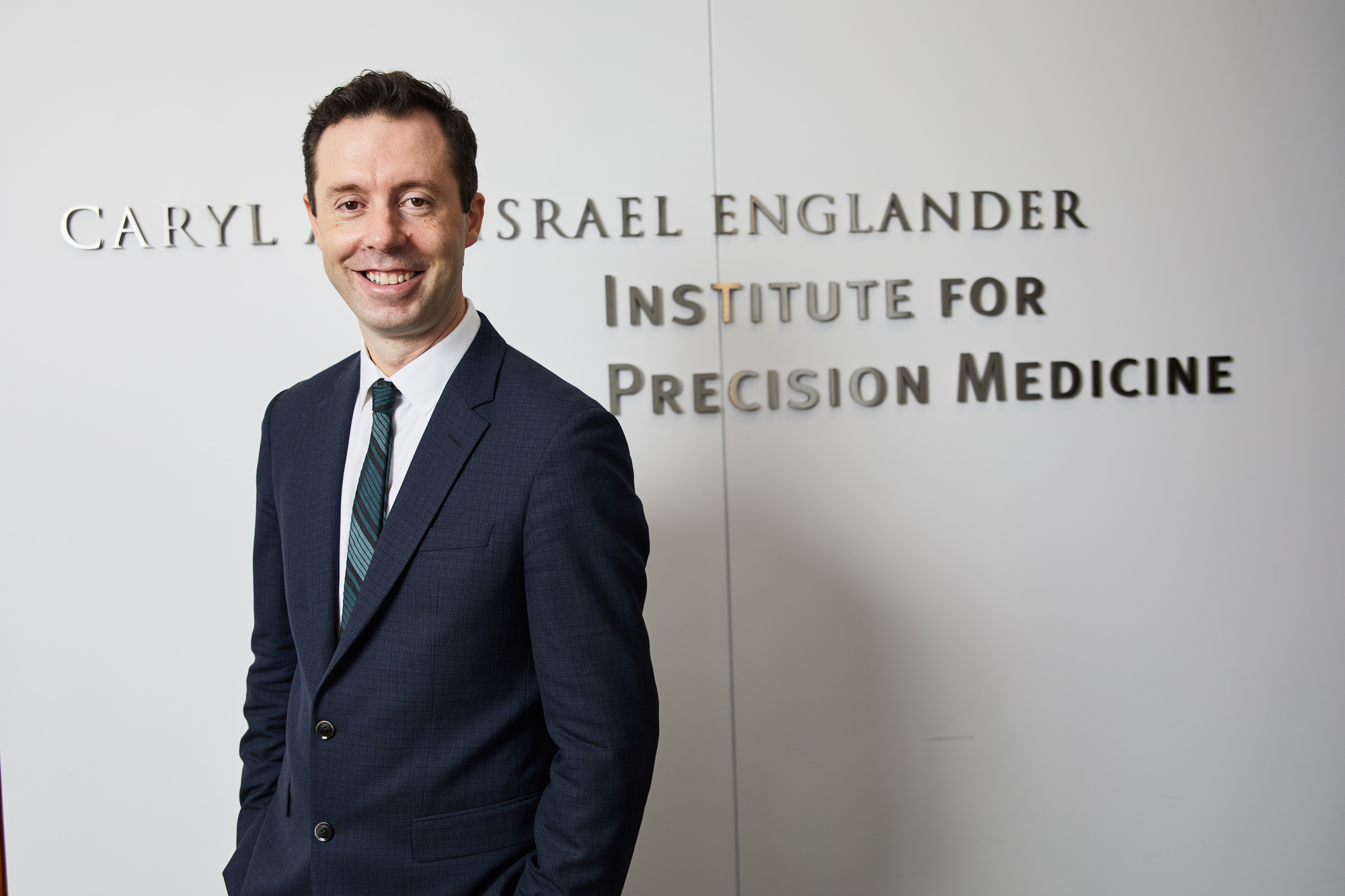
The Englander Institute for Precision Medicine gathered faculty, staff, and trainees for our annual Town Hall meeting on December 18th led by Director Olivier Elemento, Ph.D., who used the occasion to focus on the EIPM’s future direction, ongoing initiatives, and strategic priorities, highlighting both significant accomplishments and the challenges ahead.
Mission Remains Steady Amid Change
 Despite disruption across academic medicine and biomedical research, EIPM leadership emphasized that the Institute’s mission remains unchanged: to transform medicine through personalized approaches that leverage advanced technologies for disease prediction, diagnosis, treatment, and prevention.
The Institute continues to distinguish itself through deep integration across departments and centers—currently spanning 20 departments—reinforcing its role as a truly multidisciplinary hub within Weill Cornell Medicine.
Expanding Community and Leadership Highlights
EIPM remains one of Cornell’s largest institutes, with broad faculty participation at varying levels of engagement. Several new staff members have joined the institute in recent months, strengthening operational and research capacity.
Leadership also recognized key appointments and achievements, including:
- Dr. Allyson Ocean, newly appointed Medical Director of the Pancreatic Cancer Clinical Research Program and Director of the Early-Onset Gastrointestinal Cancer Program. Her work addresses the rising incidence of GI cancers in younger adults and explores innovative approaches, including cancer vaccines.
- Dr. Bishoy Faltas, Chief Research Officer, is leading development of a forward-looking strategic plan focused on growth, prioritization, and increasing the institute’s visibility and impact.
Research Productivity and Clinical Impact
EIPM’s research output remains strong. In 2025 alone, institute-affiliated investigators published 108 peer-reviewed papers, many in top-tier publications, bringing the total since EIPM’s founding to nearly 1,000 publications.
 Clinical research continues to expand, with patient-facing studies playing a central role. Notably:
- The Grail GALLERI and PATHFINDER trials, testing next-generation multi-cancer early detection assays, enrolled nearly 250 patients at Weill Cornell Medicine. Results were presented at ESMO, with EIPM investigators serving as co-authors.
- Additional studies address cancers of unknown primary and other high-impact clinical challenges.
Platforms Powering Precision Medicine
EIPM’s growing portfolio of research platforms continues to fuel collaboration and discovery:
- A liquid biopsy platform, launched over the past year, supports cutting-edge work in circulating tumor DNA and circulating tumor cell technologies, with strong academic–industry engagement.
- The organoid program has processed more than 4,000 samples and now houses nearly 400 patient-derived organoids, forming a unique and highly utilized resource. A comprehensive manuscript analyzing this collection is currently in preparation. For more information on this work please see a recent profile interview with our Director of Ex Vivo Models Benjamin D. Hopkins, Ph.D.
- Research pathology, spatial biology, and imaging platforms are producing high volumes of data despite staffing and resource constraints, underscoring the institute’s resilience and productivity.
AI and Computational Innovation at the Forefront
Artificial intelligence remains a major strategic focus. Highlights include:
- The NIH-funded Bridge2AI initiative, which developed a voice-collection app now powering one of the world’s largest curated voice datasets, with over 1,000 samples. The platform is already being applied beyond its original scope, including collaborations focused on detecting cognitive and neurological toxicities.
- Development of a Foundational IVF Model for Imaging. This work by Dr. Iman Hajirasouliha, trained on large-scale biomedical data, represents a major advance in the field of in vitro fertilization by assessing embryo viability. Major elements include ploidy prediction, quality scoring, component segmentation, embryo identification, and timing of developmental milestones, which were highlighted in a recent Nature Communications, publication, “A foundational model for in vitro fertilization trained on 18 million time-lapse images.”
- Robust computational infrastructure enabling secure sharing of sensitive genomic and clinical datasets across internal and external collaborators.
Education, Outreach, and Community Building
EIPM continues to invest heavily in training and engagement:
- Ongoing seminar series, case conferences, journal clubs, and AI working groups.
- Launch of a new AI Clinic in the coming year to train clinicians and researchers as advanced users of large language models.
- Plans for a Health AI Hackathon, expanded campus-wide AI symposia, and deeper collaboration with the Pathology and Laboratory Medicine department and other clinical departments.
- Plans are well underway for another successful Summer Program for talented high school and college students, administered collaboratively with the Meyer Cancer Center.
Dr. Elemento emphasized the importance of rebuilding in-person connections and fostering a more cohesive EIPM community following the disruptions of the COVID era.
Financial Landscape and the Path Forward
 While the institute’s budget remains substantial, Dr. Elemento and Associate Director Jeffrey Catalano, MBA acknowledged financial pressures consistent with broader trends at Weill Cornell and across biomedical research. Declining grant funding and institutional constraints underscore the need for new revenue sources.
Priorities moving forward include:
- Expanding external grants, industry partnerships, and philanthropy.
- Leveraging EIPM platforms as shared resources supported by collaborative funding.
- Exploring joint recruitments and initiatives with other departments.
- Increasing focus on clinical trials and translational impact.
Strategic Vision for the Next Phase
Looking ahead, EIPM aims to shift from technology development toward greater clinical impact, particularly through interventional precision medicine studies and AI-enabled decision-making. An external advisory board is also being developed to help guide future directions.
Leadership concluded the town hall on an optimistic note, citing the institute’s people, platforms, and philanthropic support as enduring strengths—and reaffirming confidence in EIPM’s long-term role in advancing personalized medicine.
# # #