
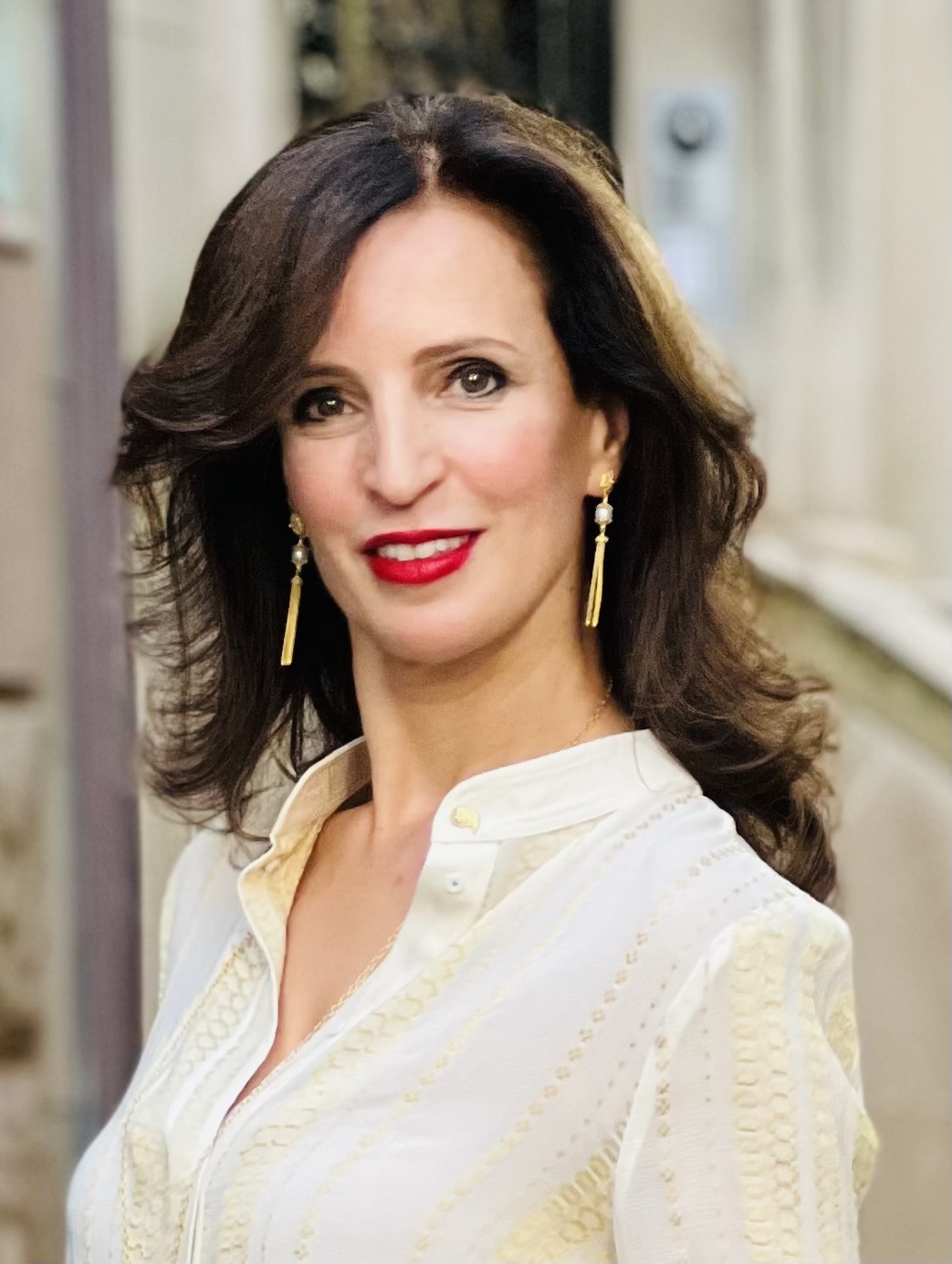
Q: What first drew you to medicine, and later to breast oncology?
Dr. Andreopoulou:
I was drawn to medicine from an early age by both intellectual curiosity and a desire to care for others. I grew up in a family that deeply valued education and service, and those values, combined with my love of biology, chemistry, and pharmacology, naturally led me toward medicine.
My interest in oncology developed during medical school, when advances in molecular biology were transforming our understanding of cancer. As technologies emerged that allowed us to study the genetic drivers of disease, it became clear that cancer treatment was entering a new era. I was fortunate that my career evolved alongside these scientific breakthroughs—from the Human Genome Project to today's precision medicine approaches. Throughout that journey, one principle has remained constant: the better we understand the biology of a disease, the better we can treat it.
Striving for clinical excellence while building the foundation for interdisciplinary and multidisciplinary patient-centric clinical research is my academic commitment. At WCM/NYP I have established a strong link between the breast clinic and laboratories to support scientific discovery and initiated a continuous dialogue with the Englander Institute for Precision Medicine to implement cutting edge personalized care with expedited drug development.
______________________________________________________________________________________________________________________________________________
Q: Was there a mentor who shaped your career?
Dr. Andreopoulou:
I was fortunate to train with several pioneering leaders in cancer pharmacology and medical oncology during my years in Greece, England, and later in New York. They taught me not only the science of oncology but also the importance of curiosity, rigorous thinking, and always putting patients first. Their mentorship profoundly influenced the physician and scientist I became.
______________________________________________________________________________________________________________________________________________
Q: What does precision medicine mean to you, and how has it changed breast cancer care?
Dr. Andreopoulou:
Precision medicine means matching the right treatment to the unique biology of each patient's cancer. Breast cancer isn't one disease—every patient's tumor is different, and tumors themselves evolve over time.
We've been practicing forms of precision medicine in breast cancer for decades, beginning with hormone receptor testing and treatments like tamoxifen. Later, identifying HER2 as a therapeutic target completely transformed outcomes for patients with HER2-positive disease. Today, advances in genomic testing, sequencing immunotherapy, and liquid biopsies allow us to tailor treatment with even greater precision and monitor cancers as they dynamically change.
Ultimately, precision medicine allows us to personalize care based on the individual patient and the biology of her disease at every stage.
______________________________________________________________________________________________________________________________________________
Q: Can you share an example of precision medicine helping a specific patient?
Dr. Andreopoulou:
We've seen many examples where genomic testing and sequencing has identified actionable mutations that guided targeted therapies, allowing patients with metastatic breast cancer to achieve durable disease control. In fact as testimony of chronic disease successful treatment a nurse patient with a BRCA mutation has been stage 4 with no evidence of disease for over seven years on a PARP-I inhibitor. She remains completely functional continuing full time at work
Another exciting advance is liquid biopsy, which can detect minimal residual disease before recurrence appears on imaging. Identifying relapse at this molecular stage gives us an opportunity to intervene earlier, potentially preventing resistance from developing and improving long-term outcomes. Another recent example, a young woman at an asymptomatic state and a positive signal on a liquid biopsy, prompted a workup that revealed a solitary metastasis that was resectable affording the patient a second chance multidisciplinary treatment for cure.
______________________________________________________________________________________________________________________________________________
Q: How did your international training shape your career?
Dr. Andreopoulou:
Training in Greece, England, and the United States gave me complementary perspectives.
My education in Greece provided a strong scientific foundation. In England, I learned the importance of clinical reasoning, communication, bedside medicine, and multidisciplinary care. At institutions like The Royal Marsden Hospital/Cancer Research UK, I witnessed firsthand how laboratory discoveries could be translated into patient care.
Looking back, I realize my career has paralleled remarkable advances in cancer biology, genomics, and now artificial intelligence. It's been an extraordinary time to practice academic medicine.
______________________________________________________________________________________________________________________________________________
Q: How do you view the growing role of artificial intelligence?
Dr. Andreopoulou:
AI has enormous potential to accelerate scientific discovery and improve patient care. It can process information far faster than any individual physician and help us identify patterns that might otherwise be missed.
For me, the future is the ethical foundation of the academic community and the great vision of upholding evidence-based, curated academic knowledge, with artificial intelligence as a high-speed vehicle empowering the new generation and its exciting prospects with unprecedented opportunities while remaining firmly guided by scientific integrity
But AI should never replace the physician-patient relationship. Medicine is fundamentally human. Experience, judgment, empathy, intuition, and trust cannot be automated. AI is an extraordinarily powerful tool, but it should enhance—not replace—the human connection at the center of patient care.
______________________________________________________________________________________________________________________________________________
Q: One of your research interests focuses on treatment resistance. Why is this such an important challenge?
Dr. Andreopoulou:
One of the most perplexing challenges in modern clinical oncology is the issue of intrinsic and acquired drug resistance.
Cancer evolves over time, and therapy places selective pressure on tumor cells, allowing resistant clones to emerge. Our goal is to detect those changes as early as possible—ideally before resistance becomes clinically apparent.
Much of our current research focuses on minimal residual disease, tumor metabolism, and immune surveillance escape. Expanding the unitality of ctDNA in clinical care and, more importantly, in directing drug-development to overcome endocrine resistance is a hot topic. Addressing the heterogeneity with sequencing is an important aspect for clinical trial development for implementing personalized medicine in support of effective treatment and cure. By identifying relapse earlier and understanding how tumors adapt, we hope to intervene sooner and develop more durable treatments.
______________________________________________________________________________________________________________________________________________
Q: Why has Weill Cornell Medicine been the right place for your career?
Dr. Andreopoulou:
What makes Weill Cornell unique is the combination of outstanding patient care, world-class science, and true collaboration.
The tri-institutional environment brings together clinicians, basic scientists, engineers, and computational experts in ways that accelerate discovery. The creation of the Englander Institute for Precision Medicine added another dimension by integrating genomics directly into clinical care.
It's an environment where scientific discovery moves naturally from the laboratory to the clinic, and that's exactly the type of academic medicine I've always wanted to practice.
______________________________________________________________________________________________________________________________________________
Q: What has it been like working with EIPM Director Olivier Elemento, Ph.D.?
Dr. Andreopoulou:
Olivier is a visionary leader who sees the broader possibilities of technology in medicine. He has an exceptional ability to bring together talented people from different disciplines and build collaborations that advance both research and patient care. His leadership has helped position precision medicine at the center of Weill Cornell's future.
______________________________________________________________________________________________________________________________________________
Q: What did it mean for you to be named the first woman Honorary Professor of Medicine by your alma mater?
Dr. Andreopoulou: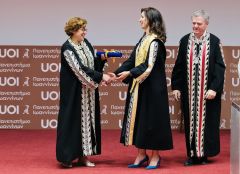 Receiving that honor was deeply moving. It gave me an opportunity to reflect on my journey—from medical school in Greece to building an academic career in the United States.
The recognition acknowledged not only my scientific work but also my commitment to lifelong learning, mentorship, research, and patient-centered service. Being the first woman to receive this distinction made it especially meaningful. I hope it serves as an inspiration for young women pursuing careers in medicine and science or humanities, including my own daughter who joined me at the award ceremony.
______________________________________________________________________________________________________________________________________________
Q: How do you spend your time outside of medicine?
Dr. Andreopoulou:
I enjoy spending time with my family, traveling, visiting museums, and attending the opera. Those experiences help me recharge and remind me of the importance of maintaining balance while pursuing a demanding career.
# # #