

Liquid biopsy is a minimally invasive method for analyzing disease‑associated material circulating in biofluids to obtain real‑time information about a patient’s condition without requiring repeated tissue sampling.
- Early detection and disease interception
- Prognostic stratification
- Monitoring response to therapy
- Tracking disease evolution over time
- Identifying potential therapeutic targets
Our mission, vision and values
Our mission is to accelerate scientific discovery and translational medicine by providing high‑quality, accessible, and scientifically rigorous support on liquid biopsy.
We empower researchers, clinicians, and innovators by delivering reliable, cutting‑edge technologies that uncover real‑time biological insights from minimally invasive samples.
We are committed to:
- Enabling discovery through sensitive, reproducible analysis of circulating biomarkers
- Democratizing advanced technologies by offering our platform, expertise, and validated workflows to partners who may not have access to specialized equipment or experience.
- Driving translational impact, helping collaborators move from hypothesis to data to actionable insights with faster turnaround and scientific support.
- Upholding scientific excellence through meticulous quality control, robust experimental design, and continuous innovation in sample processing and analytics.
- Building collaborative partnerships grounded in scientific integrity, open communication, and a shared goal of improving human health.
Our purpose is simple: to become the trusted experimental engine behind groundbreaking liquid biopsy research, enabling others to ask bold questions and get dependable answers.
Instruments & Technologies
View Instruments & Technologies Available
Parsortix® PC1 System
Parsortix is an instrument for capturing and harvesting intact and viable CTCs and CTC clusters from whole blood for downstream analyses. The instrument performs a label-free enrichment of CTCs, based on cell size and deformability. Parsortix is FDA-cleared for CTC enrichment in metastatic breast cancer.
Tethis See.d
See.d is a platform for standardized, automated fresh blood sample preparation for liquid biopsy analysis. The instrument separate plasma and white blood cells. White blood cells are transferred as a fixed monolayer on SBS slides for CTC identification, and plasma is available for cell-free content analysis. SBS slides allow immediate, gentle and efficient adhesion of any living cell, enabling a total capture. A complete analytical evaluation of morphological, proteomic and genetic features of CTCs is possible at the single-cell level.
TellDx CTC System
TellDx CTC System is an instrument for the enrichment of CTCs that combines microfluidics and CD45-depletion. It allows for the recovery of viable CTCs for downstream analyses.
CellSieve TM Microfilters
CellSieve TM Microfilters allow for the size-based enrichment, through whole blood filtration, of different cancer associated circulating cells (including CTCs, CTC clusters, and cancer-associated macrophage-like cells (CAMLs)). After filtration, cells are stained for the nucleus and markers of interest, followed by imaging under the microscope.
ScreenCell
ScreenCell technology include a variety of kits for the size-based enrichment of CTCs through filtration. Different kits can be used for CTC cytology and molecular biology analyses, or for cell culture.
Services
Learn More About Services Our Team Offers
Sample Collection & Processing
- Whole blood collection and stabilization (Streck, EDTA, CellSave, etc.)
- Plasma and serum separation with standardized, high‑viability workflows
- PBMC isolation (Ficoll, Lymphoprep, automated systems)
- Sample quality control assays (hemolysis scoring, nucleic acid QC, cell viability)
- Clinical‑grade SOPs for reproducible processing
Nucleic Acid Extraction & Quantification
- cfDNA extraction (high‑yield, high‑purity protocols)
- ctDNA enrichment and size selection
- Extracellular vesicle RNA/DNA extraction
- Whole blood RNA extraction (bulk or cell‑type‑specific)
- Automated high‑throughput nucleic acid extraction
Biobanking & Sample Management
- Long‑term cryogenic storage of plasma, serum, cfDNA, RNA, PBMCs, EVs
- Data curation and secure database management
- Logistics & distribution for collaborator studies
Molecular Profiling Services (Liquid Biopsy Focus)
- Cell‑free DNA analysis
- Mutation profiling (SNVs, indels, CNVs)
- Methylation profiling of cfDNA
- Fragmentomics & nucleosome positioning
- Cell‑free RNA sequencing
- Extracellular vesicle characterization
- Circulating tumor cell (CTC) analysis (isolation, staining, genomics)
- Targeted sequencing panels (oncology, MRD, custom assays)
- Whole‑genome sequencing / shallow WGS for copy‑number landscapes
Single‑Cell Technologies
- Single‑cell isolation wifh Micromanipulation
- Single‑cell genomics (scDNA‑seq)
- Single‑cell transcriptomics (scRNA‑seq, multiome)
Imaging & Cell Biology Services
- Fluorescence and confocal microscopy
- High‑content imaging with automated quantification pipelines
- Immunofluorescence & immunocytochemistry on rare cells/CTCs
Bioinformatics, Statistics & Machine Learning
- Raw data processing for sequencing and imaging
- Variant calling pipelines optimized for cfDNA/ctDNA
- Methylation deconvolution & tissue‑of‑origin inference
- Fragmentomics‑based ML classifiers
- Single‑cell analytics (clustering, trajectory, cell‑type annotation)
- Predictive modeling & biomarker discovery
- Interactive dashboards and publication‑ready reports
Study Design, Advisory & Collaboration
- End‑to‑end experimental design (bench → data → interpretation)
- Assay selection guidance (genomic, epigenomic, transcriptomic, proteomic)
- Cross‑discipline project management with defined milestones
Specialized & Advanced Services
- Minimal residual disease (MRD) monitoring assays
- Ultra‑low‑input / low‑allele‑frequency detection
- TCR/BCR repertoire profiling
- Long‑read sequencing for structural variants
- Multi‑omic integration across cfDNA, EVs, CTCs, and single‑cell data
- Assay development & validation for partner labs and consortia
Grant Writing & Experimental Design Support
We help partners secure funding and design robust, review‑ready studies that stand up to scientific and statistical scrutiny.
Grant Strategy & Writing
- Opportunity matching & strategy (NIH, NSF, DoD, EU, foundations, disease‑focused RFPs)
- Specific Aims development with clear hypotheses, outcomes, and decision points
- Significance & Innovation articulation tailored to the funding mechanism
- Approach section drafting with detailed experimental plans, controls, and alternatives
- Letters of Support / Consortium agreements and facility/resource descriptions
- Budget & Justification aligned with scope, personnel, and milestones
Experimental & Statistical Design
- Randomization, blinding, batch‑effect mitigation guidance
- MRD/monitoring study frameworks (sampling intervals, thresholds, decision rules)
- Translational study design: endpoints, covariates, clinical integration, and feasibility
Review‑Ready Deliverables
- Annotated Specific Aims page (1 page, fully formatted)
- Gantt chart & milestone table with risk mitigation strategies
- Flow diagrams for sample → assay → analysis pathways
- Mock figures & preliminary data packaging (using pilot or literature‑based benchmarks)
- Response‑to‑reviewer support for resubmissions
Personnel
The Liquid Biopsy Platform empowers the research community with instrumentation and technical expertise. Founded by Dr. Massimo Cristofanilli, MD, and directed by Dr. Carolina Reduzzi, PhD, we support every stage of the liquid biopsy process.
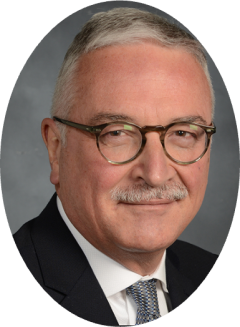
Massimo Cristofanilli, MD
Founder of The Liquid Biopsy Platform
Dr. Massimo Cristofanilli is an internationally recognized authority in liquid biopsy and a pioneer in breast cancer precision medicine. As Founder of The Platform of Liquid Biopsy, he leverages decades of translational and clinical leadership to advance biomarker‑driven science.
His expertise shapes the platform’s vision, providing research groups with strategic guidance, innovative methodologies, and deep knowledge of circulating tumor biology. Through his leadership, the platform empowers investigators to accelerate discovery, strengthen study design, and translate cutting‑edge technologies into meaningful clinical impact.
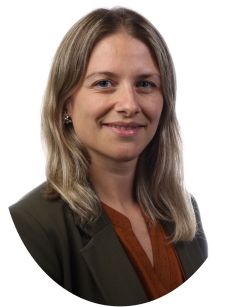
Carolina Reduzzi, PhD
Director of The Liquid Biopsy Platform
Dr. Carolina Reduzzi, serving as the Director of the Liquid Biopsy Platform, is an expert in liquid biopsy and translational research. With more than a decade of experience studying circulating tumor cells (CTCs) and circulating tumor DNA (ctDNA) across multiple solid tumors, she has developed innovative single‑cell and biomarker‑profiling pipelines that advance precision oncology.
As Director, Dr. Reduzzi leads the platform’s scientific and operational strategy, supporting research groups through state‑of‑the‑art methodologies, standardized processes, and collaborative study design. Her leadership accelerates the discovery and validation of circulating biomarkers, enabling teams to translate complex biological insights into clinically meaningful research.

Letizia Pontolillo, MD
Senior Visiting Fellow & Clinical/Translational Research Lead
Letizia Pontolillo, MD. Dr. Letizia Pontolillo is a breast medical oncologist and translational researcher serving as Senior Visiting Fellow and Clinical and Translational Research Lead. She integrates clinical expertise with biomarker‑driven research, advancing the implementation of liquid biopsy and translational biomarkers in breast cancer.
Dr. Pontolillo also plays a key leadership role in mentoring young clinical fellows, guiding them in study design, translational research principles, and the development of clinically meaningful research questions. Through her coordination of the Visiting Clinical Fellows, she supports structured clinical and scientific training for early‑career physicians, strengthening the next generation of precision‑oncology investigators.

Mara Serena Serafini, PhD
Postdoctoral Associate, Laboratory Manager & Research Operations Lead
Dr. Mara Serena Serafini is a postdoctoral scientist specializing in precision medicine, multi‑omic biomarker discovery and development of new sequencing pipelines.
In the laboratory, she enables sensitive and reproducible workflows for complex biological samples and serves as the laboratory manager, where she oversees operational workflows, protocol implementation, and coordination across multidisciplinary teams. In her role as grant assistant, she strengths the lab’s ability to secure and manage competitive funding.
Through her combined scientific and operational expertise, Dr. Serafini enhances the platform’s capacity to deliver rigorous, well‑designed studies and provides research groups with the structured support needed to drive high‑impact translational discoveries.
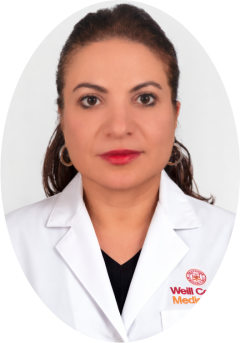
Nadia Bayou, PhD
Research Associate & Lead Specialist in CTC Enrichment Technologies and Pipelines development
Dr. Nadia Bayou is a Research Associate at The Platform of Liquid Biopsy, she plays a central role in developing and optimizing methodologies for the detection, isolation, and molecular characterization of circulating tumor cells. Her ability to bridge experimental rigor with innovative technological approaches strengthens the laboratory’s capacity to generate high‑quality data that inform real‑world clinical questions.
Beyond her scientific contributions, Dr. Bayou is deeply committed to mentoring visiting scientists, clinical fellows, and early‑career researchers who join The Liquid Biopsy Platform. Dr. Bayou’s combined expertise in innovative liquid biopsy technologies, single‑cell characterization, and early‑career mentorship elevates the platform’s mission, supporting a robust environment for precision research and the training of the next generation of scientists.
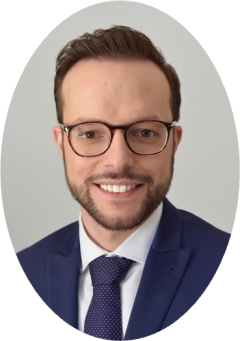
Pier Vitale Nuzzo, MD, PhD
Assistant Professor of Research in Medicine & Pathology | Medical Oncologist & Liquid Biopsy Investigator
Dr. Pier Vitale Nuzzo is Assistant Professor of Research in Medicine and in Pathology at Weill Cornell Medicine. As a medical oncologist and physician–scientist specializing in precision oncology, with a research focus on advancing liquid biopsy technologies for cancer detection and monitoring at The Liquid Biopsy Platform, he leads translational programs dedicated to circulating biomarkers, cancer epigenetics, lipid metabolism, and non‑invasive early‑detection platforms.
Dr. Nuzzo serves as a co‑investigator on multiple investigator‑initiated clinical trials, contributing to protocol design, regulatory submissions, and trial execution. His expertise spans cfDNA methylation profiling, biomarker discovery, cancer epigenomics, and translational study design. Through this interdisciplinary lens, he brings scientific leadership across several research domains within the scientific community and helps drive the development of next‑generation diagnostic strategies in oncology.
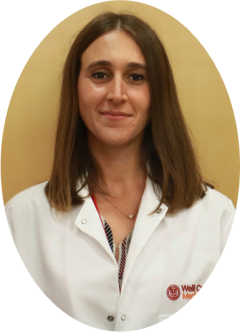
Eleonora Nicolo’, MD
Instructor of Cancer Research in Medicine & Precision Medicine Research Manager
Dr. Eleonora Nicolò is a medical oncologist, Instructor of Cancer Research in Medicine at Weill Cornell Medicine and is the Precision Medicine Research Manager at The Liquid Biopsy Platform, where she plays a key leadership role in integrating clinical oncology with biomarker-driven research. Dr. Nicolò is also specialized in the translational study of rare breast cancer subtypes, bringing unique clinical expertise to understudied patient populations.
Dr. Nicolò’s work centers on the study of circulating biomarkers to understanding treatment response, and resistance mechanisms in breast cancer. She collaborates closely with clinicians, and data analysts to develop rigorous study protocols, and ensure high‑quality clinical annotation of research datasets. Her expertise supports the laboratory’s mission to translate liquid biopsy technologies into practical tools that can guide precision‑oncology decisions.
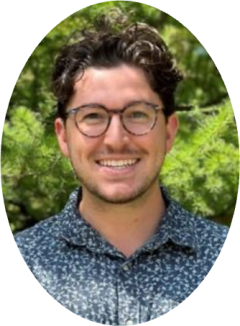
Hunter Gaudio, PhD Candidate
PhD Student in Biomedical Engineering & Lead Bioinformatics Researcher
Hunter Gaudio is a PhD student in biomedical engineering working within the Cristofanilli CTC Laboratory, where he focuses on integrating machine learning with liquid biopsy technologies to advance cancer prognosis and treatment selection. His research centers on developing computational frameworks that leverage genomic, transcriptomic, and epigenomic data to identify biomarkers, enhancing precision‑oncology approaches across multiple cancer types.
Hunter leads the data‑science initiatives, creating standardized pipelines for data processing, harmonization, and multi‑omic integration. He plays a key role in centralizing and curating large, diverse datasets, facilitating cross‑cohort comparisons, and collaborative research. His work ensures that complex liquid‑biopsy datasets are transformed into actionable insights that support both discovery research and clinical translation.
Meet Our Visiting Scientists
We value collaboration - Meet the scientists visiting the Liquid Biopsy Platform at Weill Cornell Medicine's New York City campus.
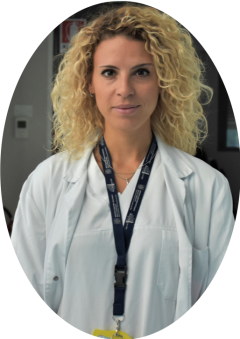
Caterina Gianni, MD
Dr. Caterina Gianni is a Medical Oncologist who completed a Visiting Scientist fellowship in The Liquid Biopsy Platform, where she focused on translational liquid biopsy research with particular emphasis on minimal residual disease (MRD) in breast cancer. Her work explored how circulating tumor DNA (ctDNA), when integrated with clinical data, can improve the understanding of relapse dynamics, treatment response, and the early detection of recurrence.
With a strong clinical background in breast cancer management, Dr. Gianni contributed to multidisciplinary research efforts aimed at incorporating circulating biomarkers into clinical decision‑making. During her fellowship, she participated in studies assessing the prognostic and clinical utility of ctDNA and other circulating biomarkers, as well as the potential of liquid biopsy technologies to improve disease monitoring and guide personalized treatment strategies. Her research bridges clinical oncology with translational biomarker development, supporting the advancement of non‑invasive tools for refining risk stratification, surveillance, and individualized therapeutic approaches in patients with breast cancer.
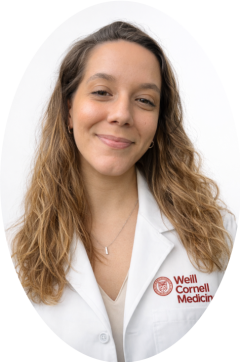
Giovanna Manga Guimarães, PhD Candidate
MSc. Giovanna Manga Guimarães is a Visiting Researcher and collaborator from the University of São Paulo (USP), Brazil, with a focus on cancer immunobiology, immunotherapy, and molecular biology.
At The Platform of Liquid Biopsy, she is investigating how liquid biopsy can serve as a source of tumor‑derived genetic material to support personalized cancer therapy, with particular interest in dendritic cell–based vaccines.
Her expertise spans multiparametric flow cytometry, molecular characterization, CTC enrichment, and cell‑therapy development. Through her research, she aims to advance innovative immunotherapeutic strategies that translate molecular insights into improved precision‑medicine approaches and more effective clinical outcomes for patients.
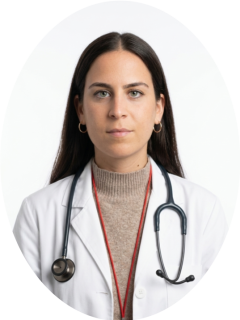
Fabiana Pratticò, MD
Dr. Fabiana Pratticò is in her final year of residency in Medical Oncology at the University Hospital of Parma (Italy), with a strong interest in breast cancer research and patient care. During her training, Dr. Pratticò has developed expertise in breast cancer genomics, tumor biology, and laboratory‑based techniques, including immunofluorescence assays and functional DNA repair assessment. She has also deepened her understanding of the tumor immune microenvironment and its impact on disease progression and therapeutic resistance.
Dr. Pratticò is currently undertaking a visiting fellowship at The Platform of Liquid Biopsy, where she aims to further expanding her skills in translational research. She also seeks to develop new skills in biomarker discovery, precision oncology, and the design of translational clinical studies. By collaborating with an international, multidisciplinary team, she will gain insight into innovative approaches to tumor characterization and treatment selection. This experience will allow her to strengthen the integration between clinical practice and research, ultimately contributing to the development of more personalized therapeutic strategies for breast cancer patients.
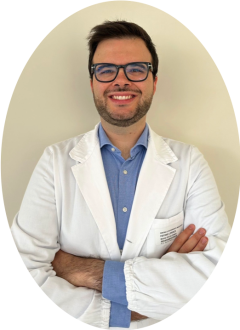
Lorenzo Foffano, MD
Dr. Foffano is a fourth‑year Oncology Resident at the University of Udine, Italy, where his clinical and research work focuses on liquid biopsy applications in metastatic breast cancer. He is currently a Visiting Fellow in The Liquid Biopsy Platform, supported by an American‑Italian Cancer Foundation (AICF) Postdoctoral Research Fellowship.
His work centers on the integrated analysis of circulating tumor DNA and circulating tumor cells to elucidate mechanisms of treatment resistance and enable early detection of disease progression in metastatic breast cancer, bridging clinical oncology practice with translational research to advance precision medicine in breast cancer care.
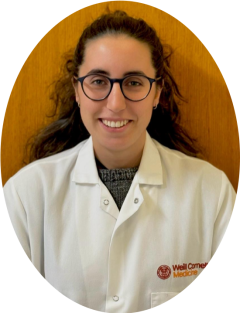
Elisabetta Molteni, PhD
Dr. Molteni spent an internship at Weill Cornell Medicine as part of her doctoral program, working within the Liquid Biopsy Platform, where she developed her thesis on the expression of HER2 on circulating tumor cells (CTCs).
During her time at the Platform, Dr. Molteni acquired new technical competencies and expanded her theoretical understanding of liquid biopsy approaches, with a particular focus on CTC biology. Her project centered on the identification, enrichment, and recovery of CTCs through advanced technologies, followed by molecular characterization to assess clinically relevant biomarkers, most notably HER2 expression. Given HER2’s pivotal role in breast cancer prognosis and targeted therapy selection, her work contributed to the deeper exploration of how HER2 status on CTCs may reflect tumor heterogeneity, guide therapeutic decisions, and offer opportunities for disease monitoring beyond tissue biopsy.
This internship represented an important milestone in her scientific and professional development, enhancing her expertise in cancer research and strengthening her capacity to contribute to translational studies focused on improving diagnostic and therapeutic strategies for breast cancer.
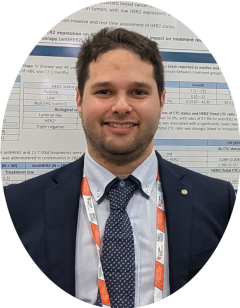
Brenno Pastò, MD
Dr Brenno Pastò is a Fellow in Medical Oncology at the University of Udine (Italy). During his training in Medical Oncology, he has developed a deep know-how on breast cancer standard and translational care and has been actively involved in research activities, including the design and conduction of investigator-initiated clinical trials.
At The Liquid Biopsy Platform, Working, dr. Pastò has broadened his knowledge on technical and analytical features of CTCs and ctDNA isolation and analysis and has helped integrate liquid biopsy-based multianalyte longitudinal monitoring in patients with breast cancer, both in the early and in the advanced stage. He still actively collaborates with Cristofanilli’s team, holding a position as Affiliate Collaborator to the group.
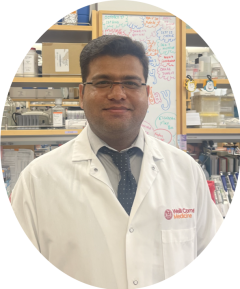
Muhammad Maaz Khan Afghan, MD
Dr. Muhammad Maaz Khan Afghan served as a Research Associate at Weill Cornell Medicine in New York from 2023 to 2025, where he worked also at The Platform of Liquid Biopsy.
In his role as Trial Coordinator for clinical trials, Dr. Afghan oversaw all facets of the study, including comprehensive data management, sample workflow logistics, and stakeholder communication. He ensured data accuracy and integrity through rigorous database maintenance and quality control, while also preparing detailed reports to track research progress and outcomes.
His laboratory work advanced breast cancer research through biospecimen collection, processing, and biobanking. In addition, he actively contributed to a collaborative research environment by presenting and facilitating discussions during lab meetings and journal clubs.
Educational Resources
- Review: Unveiling the impact of circulating tumor cells: Two decades of discovery and clinical advancements in solid tumors
International Society of Liquid Biopsy (ISLB) | Young Committee
- Review: Latest advances in clinical studies of circulating tumor cells in early and metastatic breast cancer
Upcoming Events

HemOnc Seminar Talks (HOST)-ing: The Liquid Biopsy Series
Once a month we also conduct a seminar series that dives into the fascinating world of liquid biopsy — a new way of understanding health using just a simple blood sample. This lively, easy‑to‑follow series highlights the smart technologies behind this approach and the exciting projects we’re building with our partners. Each session offers a behind‑the‑scenes look at how collaboration, creativity, and science come together to move healthcare forward.
Past Seminar Recordings

Liquid Biopsy News


The EIPM Liquid Biopsy platform receives additional funding the AACR, LBCA and Deborah Mueller Foundation to investigate metastasis in lobular breast cancer through a comprehensive liquid biopsy approach.
