
In 2018, Dr.

What Does the Future of Work Look Like?
February 23, 2021
Can virtual reality be the future of work? NBC News/Peacock tries to answer that question in episode 5 of their series, “What Does the Nature of Work Look Like?”
In this episode Alex Sigaras, Director of the AI-XR Lab at the Englander Institute for Precision Medicine, explains how he and his colleagues were using mixed reality before the pandemic to unravel the secrets behind a patients’ genetic makeup.
Longevity Genes and Brain Health
February 22, 2021
Studies of humans who live longer than 100 years have shown that many share an unusual version of a gene called Forkhead box protein 03 (FOX03). That discovery led Dr. Jihye Paik, assoc. prof. of pathology and laboratory medicine, and her colleagues, including EIPM Member Lewis C. Cantley, to investigate how this gene contributes to brain health during aging.
New Precision Medicine Approach to Lymphoma
February 4, 2021
TUMOR MICROENVIRONMENT SEEN AS A NEW PLAYER IN AGGRESSIVE LYMPHOMAS
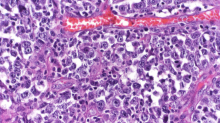
The environment surrounding the cancerous cells of a lymphoma tumor has a strong influence on the progression of these blood-cell cancers and their responses to therapies, according to a study by Weill Cornell Medicine investigators. Measuring this molecular and cellular environment, or “microenvironment,” may represent a new type of precision-medicine approach to lymphoma classification and treatment.

Patient-Centered Care
February 2, 2021
Patient-Centered Approach in Treating Thymoma
Life at 40 years old was good for Amara MacPhee. She’d lost about 40 pounds, was eating well, enjoyed spending time outside, and, even with a busy professional life, was able to carve out time for a few dance HIIT (high intensity interval training) classes a week.
“I had a very active lifestyle between work, seeing friends, and family,” Amara says. “At the time [2016], I was in the best shape of my life.”
Then Amara noticed that she was struggling during a fitness class.

Creating a Culture of Mentorship
January 26, 2021
CREATING A CULTURE OF MENTORSHIP
The Englander Institute for Precision Medicine (EIPM) is proud of its track record in creating opportunities for students at every level to learn about the promise and potential of precision medicine to create breakthroughs and improve patient outcomes. The EIPM takes mentoring very seriously, recognizing that inspiring the next generation of investigators is critically important.

EIPM Teams Awarded Funding from Starr Consortium
January 15, 2021
New Collaborations Awarded Funding from Starr Cancer Consortium
JANUARY 15, 2021

The Study of Gene-Environment Interactions
January 5, 2021
Researchers at Weill Cornell Medicine and Cornell University’s Ithaca campus have developed a new computational method for studying genetic and environmental interactions and how they influence disease risk.
The research, published Jan. 7 in The American Journal of Human Genetics, makes the process of finding these interactions much less difficult and demonstrates their importance in determining body mass index and diabetes risk.
GenomeWeb: Utility of Clinical WGS Across Diseases
January 5, 2021
NEW YORK – A clinical research study recently launched by researchers at Weill Cornell Medicine, New York Presbyterian, and the New York Genome Center, with support from Illumina, aims to determine the diagnostic value of clinical whole-genome sequencing in a variety of disease types.

Podcast: Breast Cancer and Diverse Populations
January 4, 2021
In this episode of Back to Health, Englander Institute for Precision Medicine Member Lisa Newman, M.D. (left) and Vivian Bea, M.D. discuss the importance of early detection and diagnosis for breast cancer within minority populations. They focus on why there is such a disparity in access to care and how to close those that gap.